Reflection 39: Working Together to Achieve Excellence!
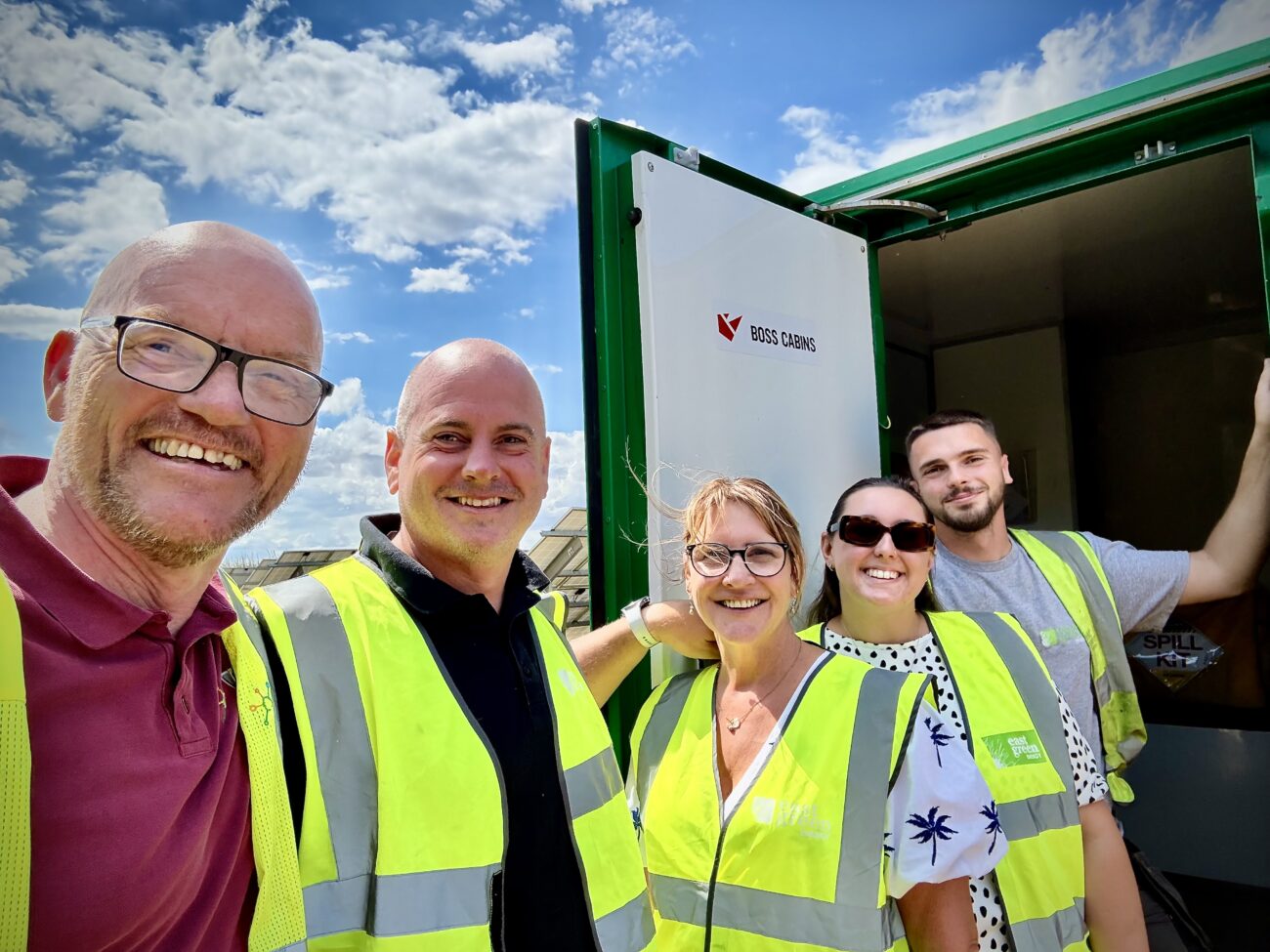
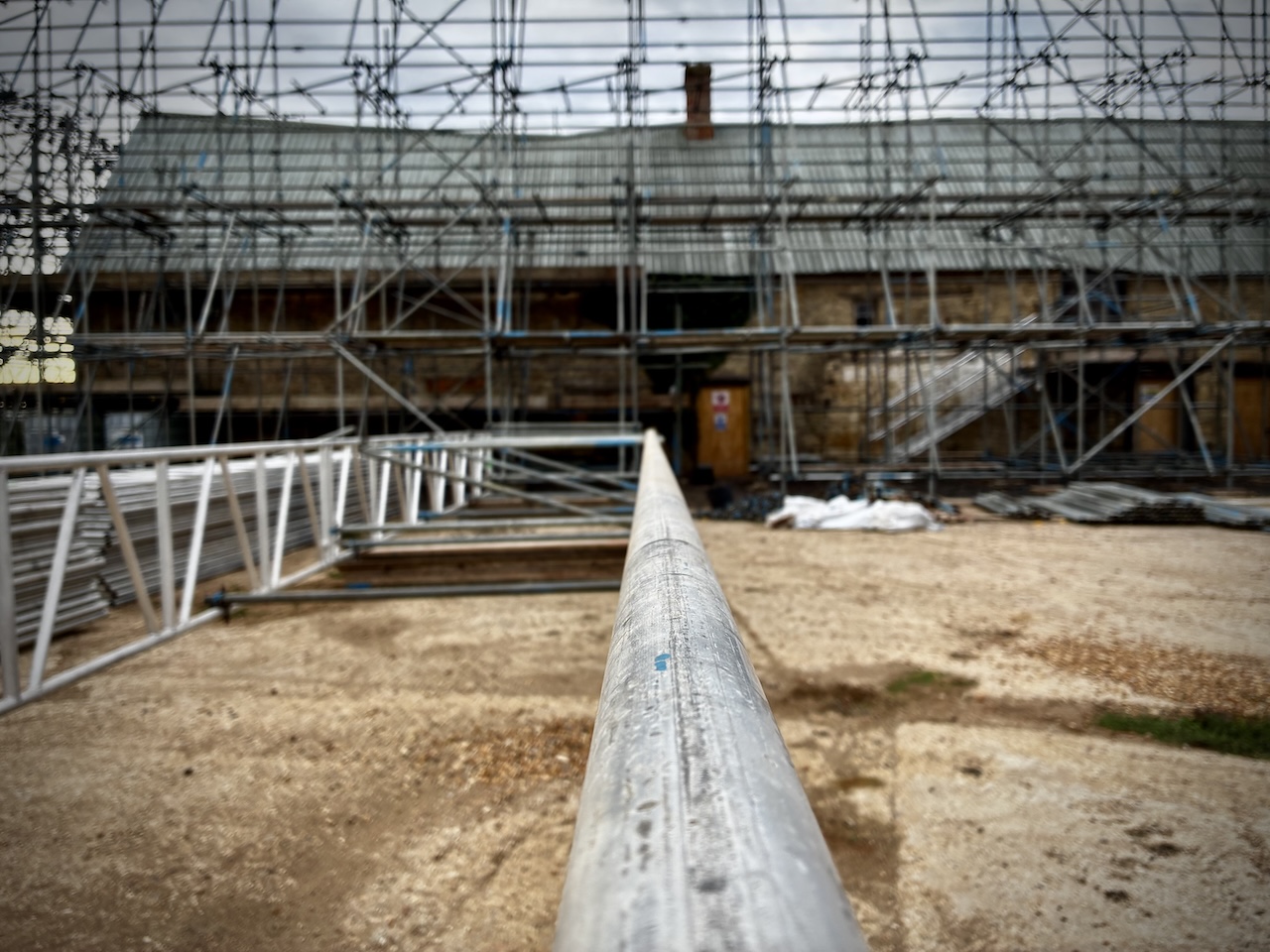
This week’s reflection starts with an event that occurred on site the previous Saturday. We were invited by a client to attend site to assist with the oversight of phase…
Read More
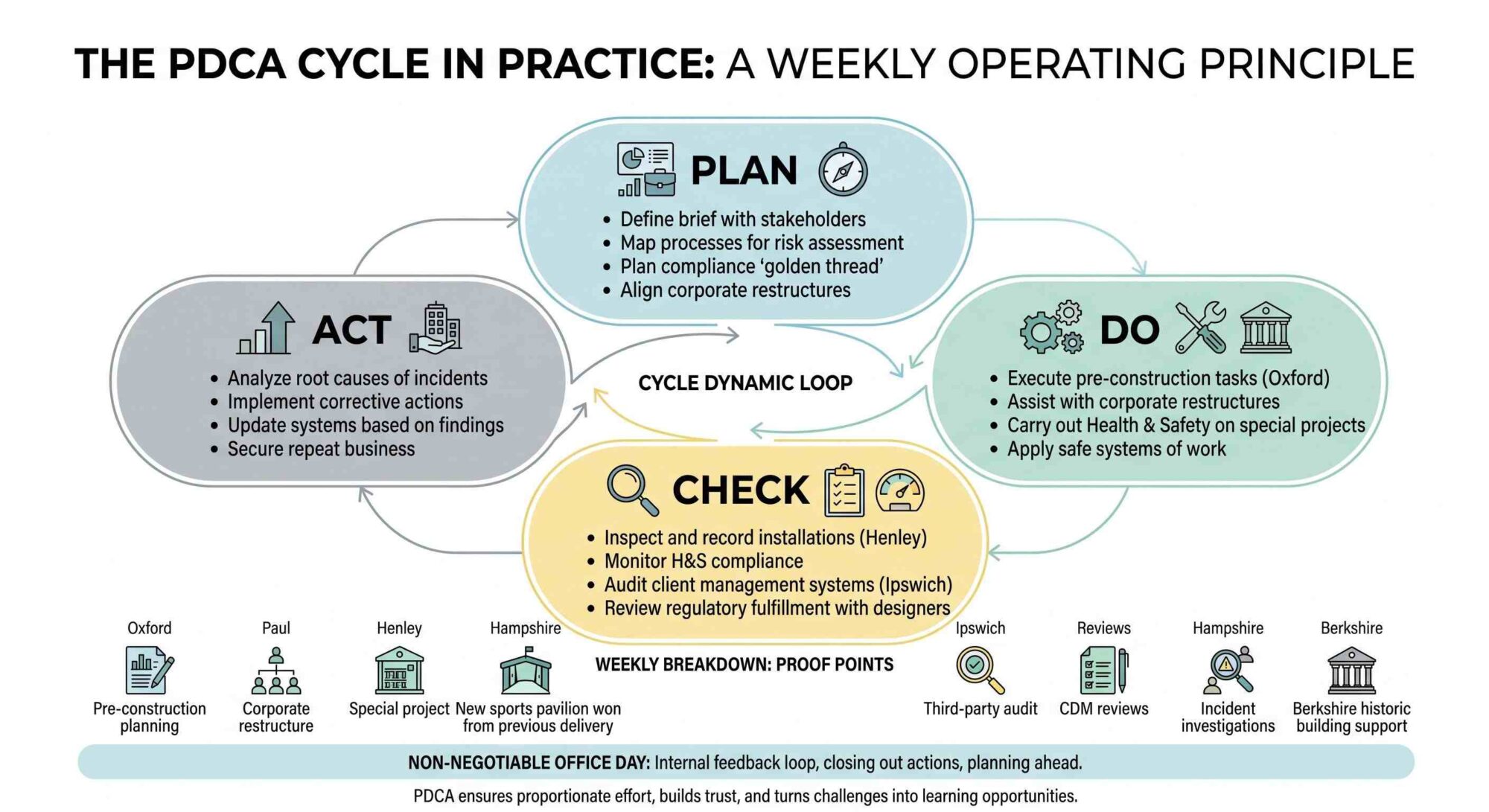
The core operating principle for LCS Project Solutions is the Plan–Do–Check–Act (PDCA) cycle. It is both a framework for delivering our services and an important part of our reputation.
This week, our work ranged from pre-construction planning in Oxford and corporate restructuring in Poole, to compliance oversight in Henley, a third-party quality management system audit in Ipswich, and incident investigations at two separate locations. Although these activities were varied, they were connected by the same question:
Have we done enough, in a proportionate manner, to interrogate those four words?
Plan. Do. Check. Act.
PDCA is not a rigid checklist. It is a dynamic cycle that helps us apply the right level of attention to each situation, build client confidence, secure repeat business and turn potential non-conformances into opportunities for learning and improvement.
Let’s dive in.
Monday — Planning and Strategy
The team visited a new project in Oxford during its pre-construction phase, meeting with the client and other interested parties to ensure that the initial planning was properly established. After gaining a clear understanding of the project brief, we will support the client in planning the works, developing risk assessments, creating safe systems of work, organising personnel and establishing how the project will be monitored for continual improvement. This was the Plan stage in action, creating a sound foundation before work begins.
We were also active in Poole, supporting a client with a corporate restructure. The focus was again on the PDCA principle, helping to clarify the objectives for the next phase and align the responsibilities of internal stakeholders with the company’s new group objectives. Good planning is not limited to construction activities. It is equally important when organisations are changing direction, structure or priorities.
Tuesday — Execution and Compliance
We were out again supporting a client with a special project involving both health and safety and building regulations compliance. One important task was ensuring that installations were inspected and accurately recorded before being covered up. This reflects the principle of the golden thread: ensuring that important information is captured, maintained and remains retrievable for building control and future reference, including for buildings that are not classified as higher-risk buildings. The work undertaken today can become essential evidence tomorrow.
A site tour was also conducted for a client delivering a new sports pavilion. The project was awarded partly because of the successful delivery of a previous pavilion. This demonstrated how a well-executed PDCA cycle can do more than support compliance and quality: it can strengthen a client’s reputation and lead directly to new opportunities.
Good delivery often depends on the practical preparation that happens before the visible work begins: the important work in the space between planning and delivery.
Wednesday — Audit and Investigation
Following seven months of extensive preparation, we were active in Suffolk supporting a client during a third-party management system audit. The prior planning meant that the client could confidently navigate its quality management system and retrieve the information required by the auditor. This preparation helped minimise the risk of non-conformances and ensured that the audit became a positive and constructive experience. A well-managed audit should not feel like an examination that an organisation is simply trying to survive. It should provide an opportunity to demonstrate how the system works and where it can be improved.
The results were self-evident; the client feedback was an added bonus:
“A special thank you to you, Lee. You’ve been an absolute star throughout. Your steady support during this process has been truly appreciated, and it’s been a genuine pleasure working with you.”
We were also active close to home for a local authority client, conducting the weekly review with designers to ensure that projects were fulfilling their duties under the Construction (Design and Management) Regulations in a reasonable and proportionate manner. Proportionality remains central. Effective compliance is not about creating unnecessary bureaucracy; it is about identifying what is reasonably required for the risks and circumstances involved.
In the background, the team continued investigations at two separate locations to determine the underlying causes of incidents and recommend actions to prevent recurrence. The purpose of an investigation is not simply to identify what went wrong. It is to understand why it happened and establish what needs to change. That is the Check–Act cycle: examine the evidence, learn from it and implement meaningful improvement.
Thursday — Hybrid Operations
Thursday involved a combination of remote and on-site activities. The team remotely supported the successful conclusion of the second day of the third-party audit while also operating at another client’s premises to ensure that procedures and protocols were being followed in practice. Effective consultancy does not always require everyone to be in the same place. With the right systems, communication and preparation, support can be delivered wherever it is needed.
Another of the team returned to a historic building in Berkshire to conduct a health and safety compliance audit and help the client navigate the complexities of applying modern building regulations to an existing structure. Historic buildings often require careful judgement. The challenge is to respect the character and constraints of the structure while ensuring that current safety and regulatory expectations are properly understood and addressed.
Friday — Internal Alignment and Future Planning
Friday was our non-negotiable office day, with the team working from their respective desks. The primary focus was to close out significant actions from the week and plan carefully for the week ahead, ensuring that client briefs would be delivered effectively. Virtual team meetings were held to discuss ongoing projects, share insights, review issues and agree the correct actions. Any remaining time was used to complete client work and undertake further research.
This internal alignment is an important part of the PDCA cycle. We cannot consistently deliver a high-quality service to clients unless we also plan, review and improve the way we work as a team.
Closing Thought – Strength in PDCA
At the beginning of the week, we asked whether we had done enough, in a proportionate manner, to interrogate the words Plan, Do, Check and Act. This week’s work provides the answer. From the foundational planning undertaken in Oxford and Poole to the detailed compliance work, the successful third-party audit in Suffolk and the reviews and investigations conducted elsewhere, PDCA was not simply a motto. It was a practical framework applied across every engagement. It supported the development of new projects, helped navigate complex regulations in a historic building, strengthened an existing client relationship and turned incident investigations into opportunities for prevention.
The true strength of Plan–Do–Check–Act lies not in the words themselves, but in their consistent application. It is the thread that connects a corporate restructure to a construction site, an audit to an incident investigation and a client’s past success to its future opportunities.